
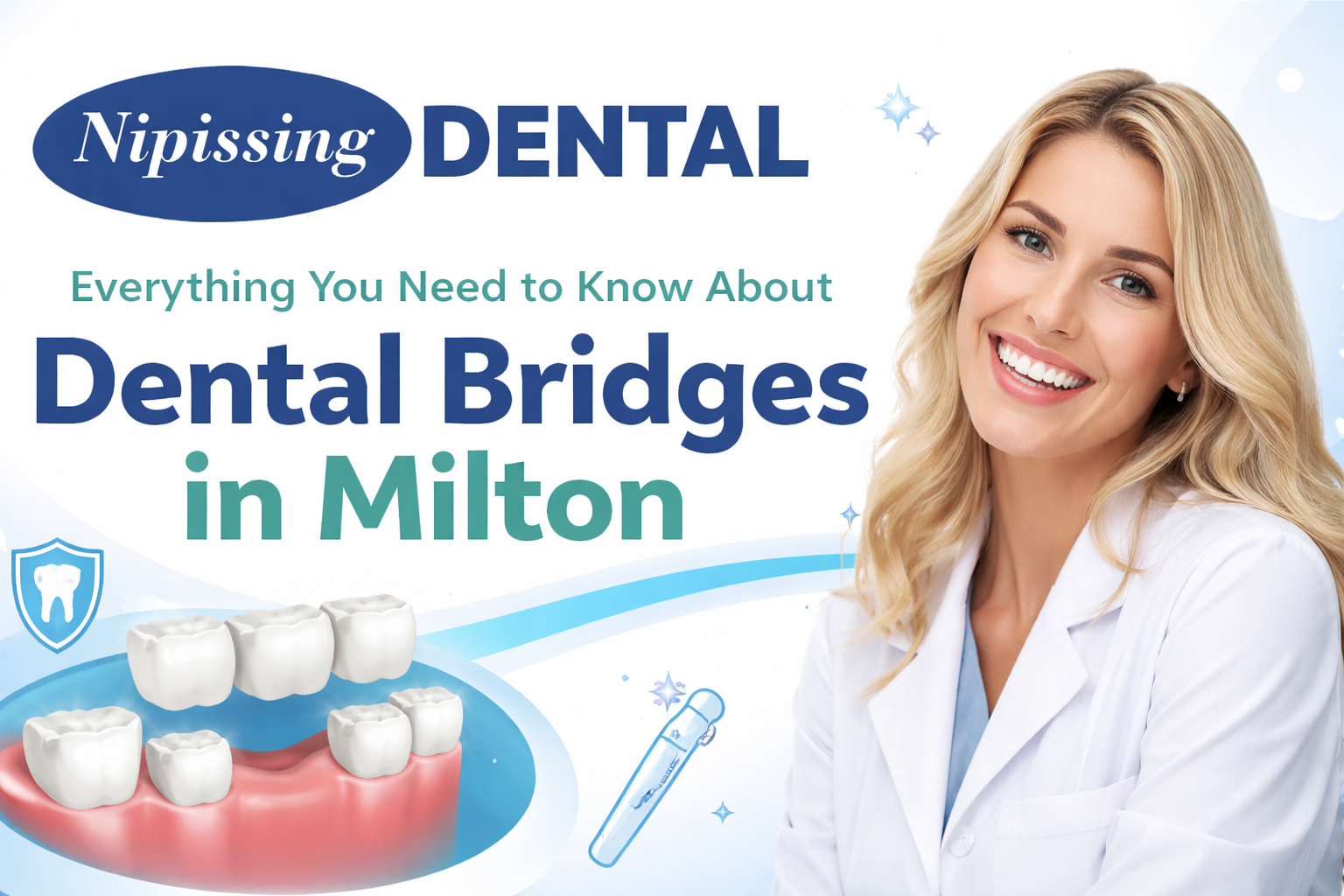
A healthy, complete smile is more than just an aesthetic asset—it plays a crucial role in your overall oral health, confidence, and quality of life. If you’re dealing with missing teeth, dental bridges are one of the most reliable and widely recommended solutions available today. For residents of Milton, understanding how dental bridges work, their benefits, and what to expect can help you make an informed decision about your dental care.
In this comprehensive guide, we’ll walk you through everything you need to know about dental bridges in Milton.
What Are Dental Bridges?
A dental bridge is a fixed dental restoration used to replace one or more missing teeth. It “bridges” the gap created by missing teeth by anchoring an artificial tooth (or teeth) to the natural teeth or dental implants on either side.
The artificial tooth used in a bridge is called a pontic, and it is designed to match your natural teeth in shape, size, and colour—ensuring a seamless appearance.
Why Are Dental Bridges Important?
Missing teeth can lead to more than just cosmetic concerns. Here’s why replacing them is essential:
- Prevents shifting of teeth: Adjacent teeth may drift into the gap, causing misalignment
- Restores chewing ability: Makes eating more comfortable and efficient
- Improves speech: Missing teeth can affect pronunciation
- Maintains facial structure: Prevents sagging caused by bone loss
- Boosts confidence: Restores your natural smile
Dental bridges offer a practical and effective solution to all these issues.
Types of Dental Bridges Available in Milton
Dentists in Milton typically offer several types of dental bridges based on your specific needs:
1. Traditional Dental Bridges
These are the most common types. They involve creating crowns for the teeth on either side of the gap, with a pontic in between.
Best for: Patients with healthy natural teeth on both sides of the missing tooth.
2. Cantilever Bridges
Used when there is only one adjacent tooth available for support.
Best for: Areas of the mouth that experience less pressure, like front teeth.
3. Maryland Bridges
These use a metal or porcelain framework bonded to the back of adjacent teeth instead of crowns.
Best for: Patients looking for a more conservative option.
4. Implant-Supported Bridges
Instead of being supported by natural teeth, these bridges are anchored using dental implants.
Best for: Patients missing multiple teeth or seeking a long-term, durable solution.
The Procedure: What to Expect
Getting a dental bridge in Milton usually involves multiple visits:
Step 1: Initial Consultation
Your dentist will examine your teeth, take X-rays, and discuss the best treatment plan.
Step 2: Tooth Preparation
For traditional bridges, the adjacent teeth are reshaped to accommodate crowns.
Step 3: Impressions
A mould of your teeth is taken to create a custom-fit bridge.
Step 4: Temporary Bridge
A temporary bridge may be placed to protect your teeth while the permanent one is being made.
Step 5: Final Placement
Once ready, the permanent bridge is fitted, adjusted, and cemented into place.
Benefits of Dental Bridges
Dental bridges offer numerous advantages:
- Natural appearance
- Quick restoration process
- Improved oral function
- Non-removable (fixed solution)
- Cost-effective compared to implants
They are a popular choice for patients looking for a balance between affordability and effectiveness.
Are Dental Bridges Right for You?
You may be a good candidate for dental bridges if:
- You have one or more missing teeth
- You have healthy teeth or implants to support the bridge
- You maintain good oral hygiene
- You want a fixed (non-removable) solution
However, your dentist will evaluate your oral health to determine the best option for you.
Cost of Dental Bridges in Milton
The cost of dental bridges can vary depending on several factors:
- Type of bridge
- Number of teeth being replaced
- Materials used (porcelain, ceramic, metal)
- Complexity of the procedure
- Dentist’s experience and clinic location
On average, dental bridges are more affordable than implants but may require replacement after several years.
It’s always a good idea to consult with your dentist for a detailed estimate and check if your dental insurance covers part of the cost.
How to Care for Your Dental Bridge
Proper care is essential to extend the lifespan of your dental bridge:
- Brush twice daily with fluoride toothpaste
- Floss daily, especially around the bridge
- Use special tools like floss threaders or water flossers
- Avoid hard or sticky foods that may damage the bridge
- Visit your dentist regularly for check-ups and cleanings
With proper care, dental bridges can last 5 to 15 years or longer.
Choosing the Right Dentist in Milton
Selecting the right dental professional is crucial for successful treatment. Look for:
- Experience in restorative dentistry
- Positive patient reviews
- Modern technology and facilities
- Transparent pricing and consultation
- Personalized treatment plans
A skilled dentist will ensure your dental bridge fits comfortably and looks natural.
Common Myths About Dental Bridges
Let’s clear up a few misconceptions:
Myth 1: Dental bridges look fake
Modern bridges are designed to match natural teeth perfectly
Myth 2: The procedure is painful
It’s typically done under local anesthesia and is quite comfortable
Myth 3: Bridges don’t last long
With proper care, they can last over a decade
Final Thoughts
Dental bridges are a reliable and effective solution for restoring missing teeth and improving your overall oral health. Whether you’re looking to regain your smile, improve functionality, or prevent future dental issues, dental bridges in Milton offer a practical option tailored to your needs.
Consulting with a qualified dentist is the first step toward determining the best treatment plan for your unique situation.
FAQs About Dental Bridges in Milton
1. How long do dental bridges last?
Dental bridges typically last between 5 to 15 years, depending on oral hygiene and maintenance.
2. Are dental bridges painful to get?
No, the procedure is generally painless as it is performed under local anesthesia. Some mild discomfort may occur afterward.
3. Can I eat normally with a dental bridge?
Yes, after a short adjustment period, you can eat most foods comfortably. However, avoid very hard or sticky foods.
4. How do I clean under a dental bridge?
You can use floss threaders, interdental brushes, or water flossers to clean underneath the bridge effectively.
5. Are dental bridges covered by insurance?
Many dental insurance plans partially cover bridges, but coverage varies. It’s best to check with your provider.