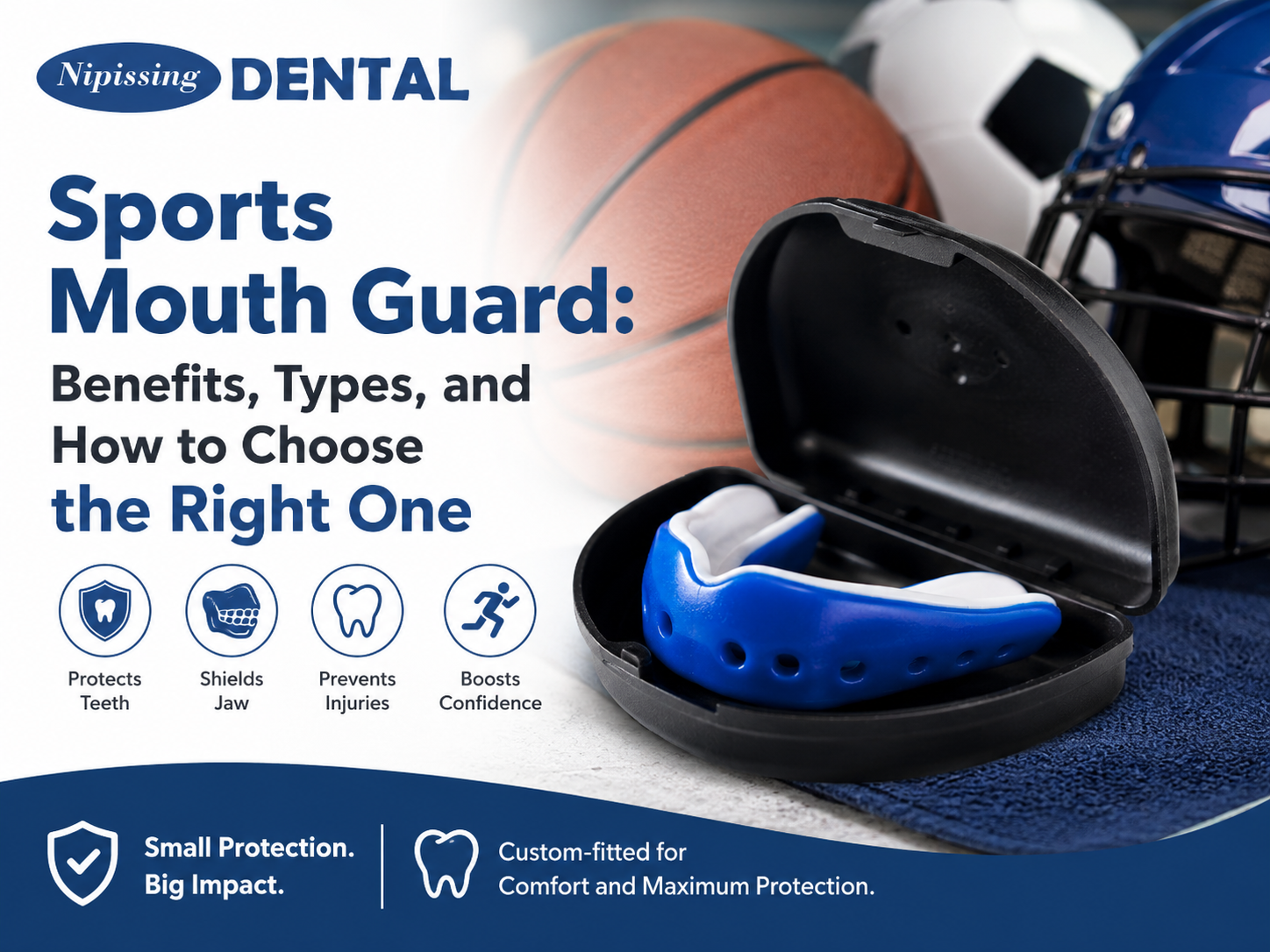
A great game can change in a split second.
One moment you're chasing a soccer ball, battling for a rebound, or skating toward the net. The next, an accidental elbow, collision, or fall puts your teeth at risk.
That's why a sports mouth guard remains one of the most important pieces of protective equipment for athletes of all ages.
While helmets, pads, and proper footwear often get most of the attention, oral protection deserves a place on every athlete's checklist. A properly fitted sports mouth guard can help prevent dental injuries, protect teeth during sports, and reduce the risk of expensive dental treatment after an accident.
According to the American Dental Association (ADA), athletes who do not wear mouthguards are significantly more likely to experience dental injuries than athletes who wear them. Dental experts across North America continue to recommend mouthguards for many contact and recreational sports.
In this guide, you'll learn about the benefits of a sports mouth guard, the different types available, how to choose the right option, and why many athletes prefer a custom sports mouth guard for maximum protection.
What Is a Sports Mouth Guard?
A sports mouth guard is a protective appliance worn over the teeth during athletic activities.
Its purpose is simple: absorb and distribute impact forces that could otherwise damage teeth, gums, lips, cheeks, and jaw structures.
You may also hear terms such as:
- Athletic mouthguard
- Protective mouthguard
- Dental mouth guard for sports
- Mouth protector for sports
- Sports dental guard
Regardless of the name, the goal remains the same—protect your smile while you play.
Think of a mouthguard as a seatbelt for your teeth. You hope you'll never need it, but when something unexpected happens, you'll be glad it's there.
Why Athletes Should Wear Mouth Guards
Sports involve movement, speed, competition, and sometimes contact.
Even athletes participating in sports that seem relatively safe can experience accidental falls, collisions, or impacts.
A sports mouth guard helps:
- Prevent dental injuries
- Reduce the risk of chipped or broken teeth
- Protect crowns and restorations
- Shield lips, cheeks, and tongue
- Provide jaw protection
- Minimize emergency dental treatment
- Support long-term oral health
Dental injuries often occur without warning. A simple collision can turn a great day into an emergency dental visit.
That's why dental professionals consistently recommend mouthguards for athletes of all ages.
What Do Leading Dental Organizations Say?
Several respected dental organizations support the use of sports mouth guards.
The American Dental Association (ADA) recommends mouthguards for a wide range of sports and recreational activities that carry a risk of injury.
The Academy for Sports Dentistry reports that sports-related dental injuries remain one of the most common forms of facial trauma among athletes.
The American Academy of Pediatric Dentistry (AAPD) also recommends mouthguards for children and adolescents participating in sports and recreational activities where oral injuries may occur.
The message from these organizations is clear: protecting your teeth should be part of every athlete's safety plan.
The Real Cost of Sports-Related Dental Injuries
Many athletes underestimate how serious a dental injury can become.
A chipped tooth might seem minor at first, but treatment often involves more than a quick fix.
Depending on the injury, treatment may require:
- Emergency dental care
- Dental bonding
- Crowns
- Root canal therapy
- Tooth replacement
- Dental implants
In some situations, treatment can continue for months or even years.
Compared to the cost and inconvenience of treating an injury, wearing a sports mouth guard is a small investment.
Benefits of a Custom Sports Mouth Guard
Many athletes wonder whether they should choose a custom sports mouth guard or a store-bought option.
While both provide some protection, custom-made appliances offer several important advantages.
Better Fit
A custom mouthguard is designed specifically for your teeth.
Because it fits precisely, it stays securely in place during activity.
Athletes spend less time adjusting it and more time focusing on performance.
Greater Comfort
Comfort matters.
A mouthguard that feels bulky or irritating often ends up sitting in a gym bag instead of protecting teeth.
A custom sports mouth guard offers a more natural fit, making athletes more likely to wear it consistently.
Easier Breathing and Communication
Athletes need to communicate with teammates and coaches.
A properly fitted custom mouthguard typically allows for easier breathing and clearer speech compared with many generic alternatives.
Enhanced Protection
Custom appliances distribute impact forces more effectively.
This improves chipped tooth protection and supports overall tooth injury prevention.
Long-Term Value
While custom mouthguards cost more upfront, they often provide better durability and performance.
Many athletes consider them a worthwhile investment in their health and safety.
Types of Sports Mouth Guards
Not all mouthguards provide the same level of protection.
Understanding the available options can help you make the right decision.
1. Stock Mouth Guards
Stock mouthguards come pre-formed and ready to wear.
Pros
- Affordable
- Easy to purchase
Cons
- Limited fit
- Bulky design
- Can interfere with speaking
- Often provide less protection
Because they cannot be customized, stock mouthguards typically offer the lowest level of protection.
2. Boil-and-Bite Mouth Guards
These mouthguards soften in hot water and mold around the teeth.
Pros
- Better fit than stock versions
- Affordable
- Widely available
Cons
- Less precise fit
- May become loose over time
- Shorter lifespan
Many recreational athletes choose this option because it balances cost and protection.
3. Custom Mouth Guards
A sports mouth guard dentist creates these appliances using impressions or digital scans of your teeth.
Pros
- Superior fit
- Excellent comfort
- Better retention
- Maximum protection
- Greater durability
Custom mouthguards remain the preferred choice for many competitive athletes.
Which Sports Require a Mouth Guard?
Many people associate mouthguards only with football.
In reality, dental injuries occur in many sports.
Football Mouth Guard
Football involves frequent collisions and high-impact contact.
A football mouth guard should be considered essential equipment.
Hockey Mouth Guard
Hockey combines speed, sticks, pucks, and physical contact.
A hockey mouth guard provides valuable protection against dental trauma.
Basketball Mouth Guard
Basketball players frequently experience accidental elbows and collisions.
A basketball mouth guard can help reduce injury risks.
Rugby Mouth Guard
Rugby includes significant physical contact, making mouthguards a standard part of player safety.
Soccer Mouth Guard
Head-to-head collisions and falls can occur even in soccer.
A soccer mouth guard adds an important layer of protection.
Wrestling Mouth Guard
Wrestlers face close physical contact and sudden impacts.
A wrestling mouth guard helps protect teeth and surrounding tissues.
If you're still deciding which type of sports mouth guard is right for you, our guide, What Is a Sports Mouth Guard? Complete Protection Guide for Athletes, provides additional information on how custom-fitted mouthguards help protect teeth, gums, lips, and jaw structures during athletic activities. It's a helpful resource for parents, youth athletes, and adults who want to make informed decisions about sports dental protection.
Sports Mouth Guard for Kids and Youth Athletes
Children and teenagers remain especially vulnerable to sports-related dental injuries.
As youth athletes become more active in organized sports, proper protection becomes increasingly important.
A mouth guard for kids can:
- Protect developing teeth
- Reduce injury risks
- Support safe participation
- Help avoid emergency dental visits
Parents often remember helmets and shin guards. A mouthguard deserves the same attention.
For student athletes who participate in multiple sports throughout the year, consistent protection matters even more.
Sports Mouth Guard for Braces
Athletes with braces face unique challenges.
Orthodontic brackets and wires can increase the risk of cuts and injuries inside the mouth during impacts.
A sports mouth guard for braces creates a protective barrier between orthodontic appliances and soft tissues.
Athletes undergoing orthodontic treatment should consult their dentist about the most appropriate option.
Can Mouth Guards Reduce Concussion Risk?
Researchers continue to study the relationship between mouthguards and concussion risk reduction.
Current evidence supports the use of mouthguards for protecting teeth and oral structures.
However, major dental and medical organizations do not consider mouthguards a guaranteed method for preventing concussions.
Athletes should view mouthguards primarily as dental protection devices rather than concussion-prevention equipment.
How to Choose a Sports Mouth Guard
If you're wondering how to choose a sports mouth guard, consider the following factors.
Sport Type
Contact sports generally require more protection.
Football, hockey, rugby, and wrestling athletes often benefit most from custom options.
Comfort
A mouthguard only works if you wear it.
Choose a design that feels comfortable enough for regular use.
Fit
A secure fit improves protection and prevents distractions during play.
Age
Children and teens may require periodic adjustments as their mouths develop.
Dental Conditions
Athletes with braces, crowns, bridges, or implants should seek professional guidance before choosing a mouthguard.
Sports Mouth Guard Maintenance
Proper care helps maintain hygiene and extend the lifespan of your appliance.
Sports Mouth Guard Cleaning Tips
After each use:
- Rinse with cool water
- Brush gently with a toothbrush
- Allow it to air dry
- Store it in a ventilated case
Avoid:
- Hot water
- Dishwashers
- Direct sunlight
- Leaving it in a hot vehicle
Heat can distort the material and affect fit.
When to Replace a Sports Mouth Guard
Replace your mouthguard if it:
- Becomes loose
- Shows signs of wear
- Develops cracks
- Feels uncomfortable
- No longer fits correctly
Growing children often require more frequent replacements.
Why Milton Athletes Choose Custom Mouth Guards
Milton's active sports community includes hockey players, soccer athletes, football teams, basketball players, martial artists, and recreational sports enthusiasts.
Many local families choose a custom mouth guard in Milton because it offers greater comfort, durability, and protection compared with generic alternatives.
Whether you're a competitive athlete, a weekend warrior, or a parent protecting a young athlete, a professionally fitted mouthguard can help safeguard your smile.
If you're searching for a sports mouth guard near me or need a sports mouth guard dentist in Milton, professional guidance can help ensure the right fit and level of protection.
Frequently Asked Questions
Do all athletes need a sports mouth guard?
Any athlete who participates in sports with a risk of falls, collisions, or contact should consider wearing a sports mouth guard.
Are custom sports mouth guards worth it?
Many athletes find that custom mouthguards provide superior comfort, fit, durability, and protection compared with store-bought options.
Can I wear a sports mouth guard with braces?
Yes. Specially designed mouthguards can accommodate braces and help protect both teeth and orthodontic appliances.
How long does a sports mouth guard last?
The lifespan varies based on wear, growth changes, and frequency of use. Children and teens often require replacements more frequently.
How should I clean my sports mouth guard?
Rinse it with cool water after use, brush it gently, allow it to dry completely, and store it in a ventilated case.
Can a mouth guard prevent concussions?
Mouthguards help protect teeth and oral tissues. Current research does not confirm that they can completely prevent concussions.
When should I replace my sports mouth guard?
Replace it if it becomes damaged, loose, cracked, uncomfortable, or no longer fits properly.
Protect Your Smile With a Custom Sports Mouth Guard
Sports injuries happen when you least expect them.
A properly fitted sports mouth guard can help protect your teeth, gums, and jaw while allowing you to focus on performance rather than potential injuries.
At Nipissing Dental, we provide mouth guard consultations and custom sports mouth guard solutions for children, teens, and adults in Milton and surrounding communities.
Whether you play competitively or recreationally, our team can help you find the right protection for your smile.
Author Bio
Dr. Disha Hans, DMD
Dr. Disha Hans is a dentist at Nipissing Dental in Milton, Ontario. She is passionate about preventive dentistry and helping patients maintain healthy smiles at every stage of life. Dr. Hans works closely with children, teens, and adults to promote oral health through patient education, personalized treatment planning, and evidence-based dental care.
Sources
- Academy for Sports Dentistry
- American Academy of Pediatric Dentistry (AAPD)
- Canadian Dental Association (CDA)